
seasoned firewood for homes
How to Store Firewood for Maximum Freshness and Efficiency
Aug
How to Store Firewood for Maximum Freshness and Efficiency: Proper firewood storage is just as important as selecting the right type of wood. Even the best seasoned firewood can lose efficiency if it’s stored incorrectly. When wood reabsorbs moisture, it becomes harder to light, burns less efficiently, and produces more smoke.
In this guide, you’ll learn how to store firewood the right way so it stays dry, clean, and ready to burn all season long.
1. Why Proper Storage Matters
Moisture is the enemy of good firewood. Wet or damp wood takes longer to ignite, burns cooler, and produces more creosote — which can be dangerous for your chimney. Proper storage ensures:
- Higher heat output.
- Cleaner burns.
- Longer-lasting firewood.
2. Choosing the Right Location
The ideal storage spot for firewood is:
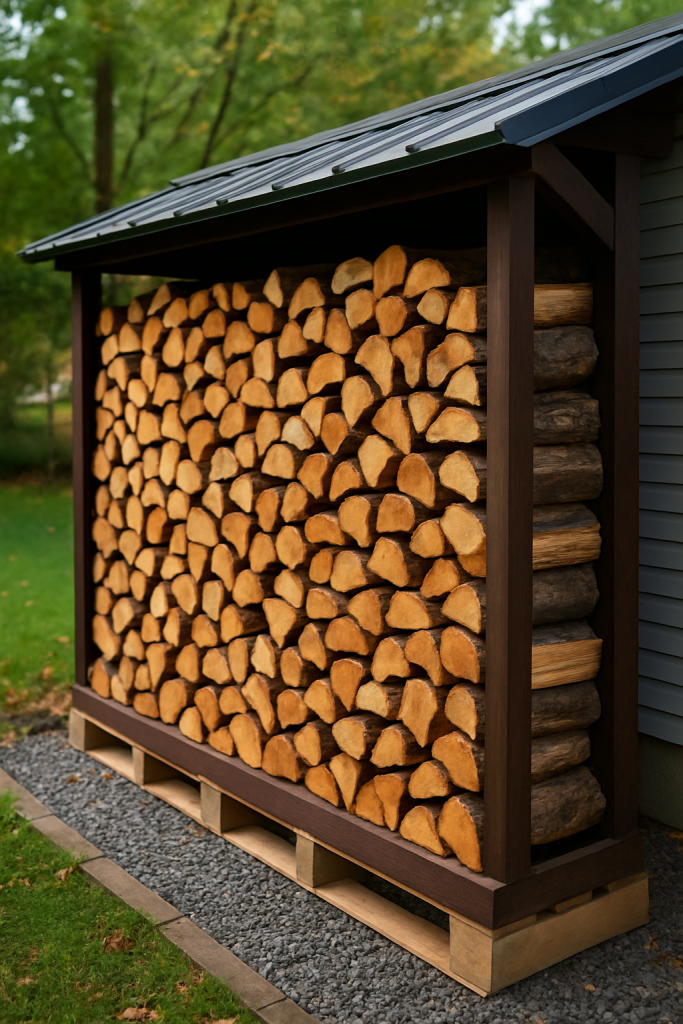
- Dry and elevated to prevent ground moisture absorption.
- Sunny and breezy to help keep moisture levels low.
- Away from your home’s siding to prevent pest problems.
3. Elevate Your Firewood
Never stack firewood directly on the ground — soil moisture will seep in and cause rotting. Use:
- Wooden pallets.
- Firewood racks.
- Bricks or concrete blocks.
This allows airflow under the pile and prevents contact with wet ground.
4. Cover Only the Top
Covering your wood is essential, but avoid wrapping the entire stack in plastic or tarps — this traps moisture. Instead:
- Use a tarp or metal roofing to protect the top.
- Leave the sides exposed for ventilation.
5. Stack Firewood the Right Way
Stacking isn’t just about piling wood high. Arrange your logs to encourage airflow:
- Place split sides facing down or out.
- Alternate directions every few rows.
- Keep stacks stable to prevent collapse.
6. Season Before Storing Indoors
If you’re bringing wood inside for a fireplace or stove, ensure it’s fully seasoned first. Indoor storage of green wood will trap moisture and could cause mold growth.
7. Pest Prevention Tips
To keep pests at bay:
- Store wood at least 20 feet from your house.
- Avoid stacking near trees.
- Rotate older wood to the top so it’s used first.
8. Storing Small Quantities Indoors
It’s fine to keep a small amount of firewood indoors for convenience — just make sure it’s dry and pest-free before bringing it inside.
9. Seasonal Maintenance
Check your stacks throughout the season for:
- Signs of mold or rot.
- Collapsed or leaning stacks.
- Tarp damage or water pooling.
Final Thoughts On How to Store Firewood for Maximum Freshness and Efficiency
By storing your firewood properly, you’ll ensure a reliable source of heat that burns hotter, cleaner, and safer. Remember — dry wood isn’t just about comfort, it’s about efficiency and protecting your home
