
seasoned firewood for homes
Oak Firewood for Sale: Complete Guide to Buying Quality Seasoned Oak Firewood
Jul
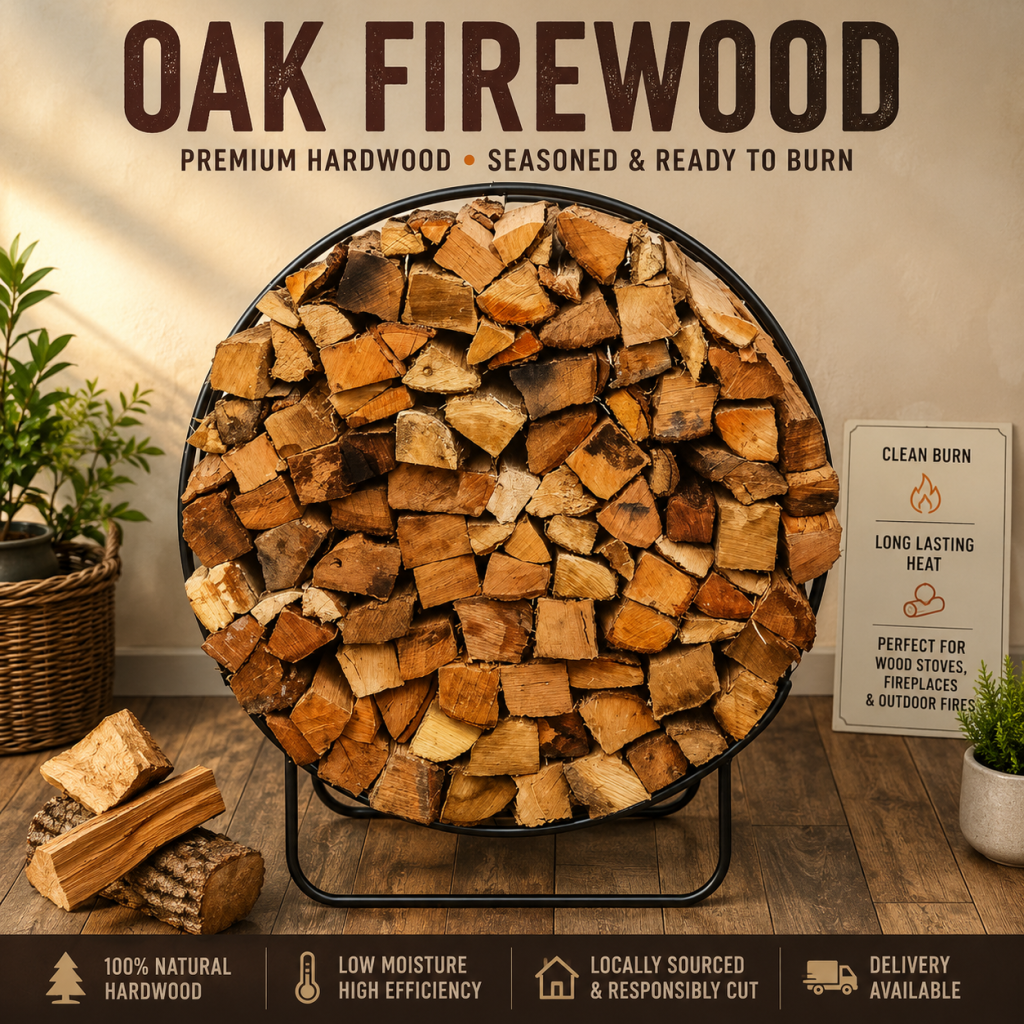
Searching for oak firewood for sale usually means you want more than just a pile of logs. You want firewood that provides dependable heat, burns for a long time, and arrives ready for your fireplace or wood stove.
Oak has long been a popular hardwood for home heating. Its high density allows properly seasoned logs to produce sustained heat and a long-lasting coal bed. However, the quality of oak firewood varies. Moisture content, species, log size, seasoning, storage, quantity, and delivery all influence what you actually receive.
Therefore, knowing what to look for before buying can save you time and help you choose better fuel.
This guide covers seasoned oak, moisture levels, burn characteristics, quantities, storage, delivery, and the questions you should ask before placing an order.
You can also explore firewood and home-heating resources at Seasoned Firewood for Homes.
Why Is Oak Firewood So Popular?
Oak combines high density with excellent burning characteristics.
Compared with many lighter woods, a given volume of dry oak contains substantial energy. Consequently, properly seasoned oak can provide strong heat without requiring constant refueling.
Oak also develops a useful bed of hot coals. Those coals continue releasing heat after the visible flames begin to decrease.
For homeowners who use a wood stove for extended periods, this characteristic can be particularly useful.
However, oak needs adequate drying time. Its density provides excellent heating potential, but that same density can make moisture slower to escape from large pieces.
For that reason, seasoned oak firewood deserves attention when you’re comparing suppliers.
Is Oak Good Firewood?
Yes. Oak ranks among the most useful hardwoods for home heating when it has dried properly.
Its advantages include good heat output, long burns, strong coaling, and widespread availability in regions where oak trees grow.
Oak also works well in different wood-burning settings. Homeowners use it in wood stoves, fireplaces, fire pits, and appropriate outdoor cooking applications.
Nevertheless, simply buying oak does not guarantee good performance.
Wet oak can be frustrating to ignite and maintain. Instead of focusing only on the species, check whether the wood has reached an appropriate moisture level.
Quality oak firewood for sale should come with clear information about its condition and quantity.
Seasoned Oak Firewood vs Green Oak
Freshly cut oak contains significant moisture.
This green wood needs time and suitable conditions to dry before it becomes good fuel for regular burning.
Seasoned oak has undergone that drying process. Splitting the logs exposes more surface area, while proper stacking allows moving air to carry moisture away.
The difference becomes obvious when you burn the wood.
Dry oak establishes a stronger fire and produces useful heat more effectively. Wet oak can hiss, smoke, and struggle to maintain combustion because the fire must expend energy heating the water inside the logs.
Therefore, if you need wood for immediate use, look specifically for seasoned oak firewood for sale or properly kiln-dried oak.
If you’re buying green oak at a lower price, plan to season it before burning.
How Dry Should Oak Firewood Be?
Moisture content provides a better measure of readiness than appearance alone.
For home burning, aim for approximately 20% moisture content or less.
Don’t simply test the outside of a log.
Take a representative piece, split it, and measure the freshly exposed inner face with a firewood moisture meter. This gives you a more useful reading of the moisture inside the wood.
If you’re purchasing a large quantity, test several pieces from different parts of the delivery.
A supplier may have stored different batches under different conditions. Checking multiple logs gives you a better picture of the overall quality.
How Long Does Oak Firewood Take to Season?
Oak often needs more drying time than many other firewood species.
The exact period depends on the oak species, log dimensions, climate, splitting, stacking method, airflow, and exposure to precipitation.
Large unsplit rounds can retain moisture for a long time.
Therefore, split oak soon after processing if you intend to season it yourself. Stack the pieces off the ground and allow plenty of air to circulate through the pile.
Sunny and breezy conditions can help the drying process.
However, don’t decide that oak is ready simply because it has been stored for a particular number of months.
Use moisture content to make the final decision.
Oak Firewood Heat Output and Burn Time
Oak’s density makes it attractive for people who want sustained heat.
Once a fire is established, dry oak can burn steadily and develop long-lasting coals. This means you may not need to add logs as frequently as you would when burning some lower-density species.
However, burn time isn’t fixed.
A large oak split in a controlled wood stove will behave differently from a small piece in an open fireplace.
Several factors influence burn duration, including:
- Log size
- Moisture content
- Air supply
- Appliance efficiency
- Firebox temperature
- Chimney draft
- Loading technique
Therefore, consider oak’s long-burning reputation as one advantage rather than a guaranteed number of hours per log.
Oak Firewood for Wood Stoves
Oak works particularly well in wood stoves.
Once you establish a hot fire, seasoned oak can provide sustained heat and a strong coal bed. These characteristics make it useful for households that depend on wood heat for extended periods.
Start your fire with dry kindling and smaller pieces. Then add larger oak splits as the fire develops.
Always follow the instructions supplied with your stove. Proper airflow matters because even excellent firewood performs poorly when an appliance operates incorrectly.
You can also combine oak with other seasoned woods.
For example, a wood that catches quickly can help establish the fire before you add dense oak logs for longer heating.
Oak Firewood for Fireplaces
Oak also makes excellent fireplace fuel.
Dry logs can create a steady fire while requiring fewer additions than many lighter woods. This makes oak suitable for long winter evenings when you want warmth and atmosphere.
Choose pieces that fit comfortably inside your fireplace rather than forcing oversized logs into the firebox.
Furthermore, use a suitable fireplace screen and maintain the chimney regularly.
Good firewood improves the experience, but safe fireplace operation remains essential.
Oak vs Ash Firewood
Both oak and ash provide excellent hardwood fuel.
Oak generally stands out for density and sustained burning. Properly seasoned oak can provide long-lasting heat and strong coals.
Ash offers a different balance. It generally splits easily and can dry faster under suitable conditions.
Therefore, homeowners do not necessarily need to choose one over the other.
Using seasoned ash alongside oak can give you a flexible supply. Ash can help establish a strong fire, while dense oak can contribute sustained heat.
If you want to understand another excellent hardwood option, explore our guides at Seasoned Firewood for Homes.
Oak vs Maple Firewood
Oak and maple are both popular choices for home heating.
However, “maple” includes several species with different densities. Hard maple can provide excellent heat and sustained burning, while softer maple species behave differently.
Oak remains particularly attractive when long burn duration is a priority.
On the other hand, locally available seasoned maple may offer better value depending on where you live.
Instead of selecting wood based only on the species name, compare dryness, quantity, price, delivery costs, and local availability.
Dry local hardwood can be a much better purchase than poorly seasoned oak.
What to Look for When Buying Oak Firewood
When you find oak firewood for sale, don’t place an order based solely on the advertised price.
First, determine whether you’re buying green, seasoned, or kiln-dried oak.
Next, confirm the quantity.
Ask about log length and average split size as well. Your firewood needs to fit your stove or fireplace comfortably.
You should also ask whether the price includes delivery and whether the supplier provides stacking.
Finally, ask about moisture.
A seller who describes oak as seasoned should be able to explain how the wood was processed and stored.
Understanding Firewood Quantities
Understanding quantity is especially important when comparing oak firewood prices.
A full cord represents 128 cubic feet of stacked firewood, including the spaces between the logs.
However, buyers may encounter other descriptions, including face cord, rack, load, bundle, or fraction of a cord.
These terms can make price comparisons difficult if the seller does not clearly define the volume.
Therefore, ask exactly how much stacked wood you will receive.
If two suppliers advertise different prices, compare equivalent quantities before deciding which offer costs less.
Oak Firewood Delivery
Searching for oak firewood for sale near me often brings up suppliers that offer local delivery.
Delivery can be extremely convenient, especially when purchasing a large quantity.
However, ask about the service before ordering.
Find out whether the supplier delivers to your postal or ZIP code and whether the advertised price includes transportation.
Next, ask where the driver will unload the wood. Some suppliers tip the load onto a driveway or another accessible area. Others may offer stacking for an additional fee.
Prepare your storage location before the truck arrives.
This allows you to move the logs into suitable storage as quickly as possible.
Can You Buy Oak Firewood Online?
Yes, depending on your location and the supplier.
Online ordering can make it easier to compare firewood types, quantities, and delivery options before buying.
However, firewood is bulky and heavy. Transportation can represent a significant part of the final price.
For this reason, local or regional delivery often makes more sense for large orders.
When shopping online, read the product information carefully. Check whether the listing identifies the species, condition, quantity, log size, and delivery arrangements.
Avoid assuming that every listing for “seasoned oak” represents the same product.
How to Store Oak Firewood After Delivery
Good storage helps protect your purchase.
Keep oak logs above the ground. A dedicated rack, stable runners, or another suitable raised base prevents the bottom pieces from sitting directly on wet soil.
Stack the logs neatly enough to maintain stability while leaving room for airflow.
Next, protect the top of the stack from prolonged rain and snow.
However, avoid sealing a damp stack completely inside plastic. Trapped moisture can slow drying and create poor storage conditions.
A roofed woodshed with open or ventilated sides provides an excellent setup.
Proper storage becomes particularly important if you purchase enough oak for an entire heating season.
Should You Buy Oak Firewood in Advance?
Planning ahead can make buying firewood easier.
Demand may increase as cold weather approaches. If you wait until winter temperatures fall sharply, you may have fewer suppliers and delivery dates to choose from.
Buying earlier also gives you time to check the wood’s moisture content.
If the logs need additional drying, you can leave them stacked in a suitable location before the heating season begins.
Planning also allows you to compare prices rather than buying the first available load because your existing supply has run out.
Avoid Moving Firewood Long Distances
Buying locally isn’t only about delivery costs.
Firewood can carry insects and diseases that threaten forests. Bark and wood can hide invasive pests even when the logs appear normal.
Therefore, avoid transporting firewood unnecessarily over long distances.
Choose a local supplier when possible and follow any firewood movement regulations that apply to your area.
This becomes especially important when transporting wood to cottages, campgrounds, or across regional boundaries.
Buy local and burn local whenever practical.
Is Oak Firewood Worth Buying?
For many wood-burning households, absolutely.
Oak provides excellent heating potential, sustained burning, and good coaling characteristics when properly seasoned.
However, quality matters more than the name alone.
Well-seasoned oak stored correctly can make excellent fuel. Wet oak sold at a premium simply because it is oak may disappoint you.
Therefore, evaluate moisture, quantity, log dimensions, price, storage, and delivery before buying.
If all of those factors look good, oak can become one of the most dependable hardwoods in your winter fuel supply.
Final Thoughts on Buying Oak Firewood
When searching for oak firewood for sale, focus on quality rather than simply finding the lowest advertised price.
Look for properly seasoned oak with moisture content around 20% or lower. Confirm the quantity before ordering, check the log dimensions, and understand delivery costs.
Once the wood arrives, store it above the ground in a ventilated location with protection from excessive precipitation.
Properly prepared oak can provide strong heat, long burns, and excellent coals for fireplaces and wood stoves.
Most importantly, buy from a supplier who clearly explains what you’re receiving.
For more information about seasoned hardwood, firewood storage, home heating, and choosing quality wood, visit Seasoned Firewood for Homes.
