
seasoned firewood for homes
How to Start a Fire in a Wood Stove: Step-by-Step Guide
Aug
How to Start a Fire in a Wood Stove: Step-by-Step Guide: A wood stove is one of the most efficient and comforting ways to heat your home during the colder months. But to get the most out of it, you need to know how to start a fire the right way. Using seasoned firewood, proper airflow, and the right arrangement will ensure your fire burns hot, clean, and safe.
In this step-by-step guide, we’ll show you exactly how to light a wood stove for maximum heat output and minimal smoke — even if you’re a beginner.
1. Gather Your Fire-Starting Materials
Before you start, make sure you have everything ready:
- Seasoned firewood – moisture content under 20% for easy ignition and hotter burns.
- Kindling – small sticks or split wood about 1 inch thick.
- Fire starters – natural wax cubes, fatwood, or crumpled newspaper.
- Matches or a long lighter – keep them handy for safe ignition.
2. Check and Prepare Your Wood Stove
Before lighting, make sure your stove is clean and ready:
- Remove old ash buildup (leave a thin layer for insulation).
- Ensure all air vents are open to allow maximum airflow at startup.
- Check that the chimney is unobstructed and clean to reduce creosote risk.
3. Arrange Your Firewood for Optimal Burning
There are several ways to stack wood in a stove, but the top-down method is one of the most efficient:
- Place large logs at the bottom.
- Stack medium-sized pieces on top of the logs.
- Add kindling above the medium wood.
- Place your fire starter at the very top.
This method burns down slowly, igniting each layer as it goes, which reduces smoke and gives you a clean, long-lasting fire.
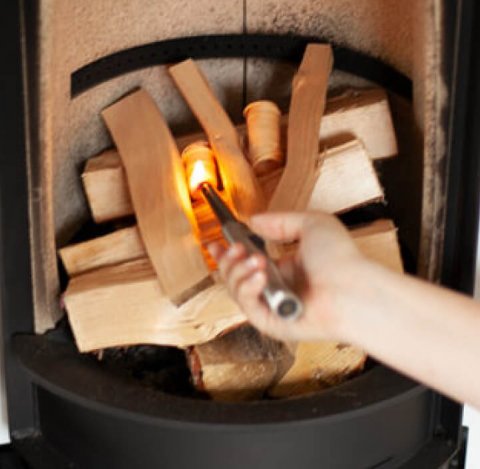
4. Light the Fire
Ignite the fire starter and close the stove door almost completely — leave it slightly ajar for the first few minutes to allow maximum airflow.
5. Adjust the Airflow
Once the fire is burning steadily:
- Gradually close the door completely.
- Adjust air vents to control the burn rate — more air for hotter, faster burns; less air for a slower, longer burn.
6. Maintain Your Fire
To keep the fire going:
- Add logs as needed before the fire dies down too much.
- Always place new wood behind or beside existing flames.
- Avoid overloading — this can reduce airflow and cause smoldering.
7. Safety Tips for Lighting a Wood Stove
- Never use gasoline, lighter fluid, or other accelerants.
- Keep combustible materials at least 3 feet from the stove.
- Install a carbon monoxide detector nearby.
- Regularly clean your chimney to avoid dangerous creosote buildup.
8. Troubleshooting Common Problems
- Too much smoke: Wood may be too wet, or airflow is restricted.
- Fire won’t stay lit: Not enough kindling or improper stacking.
- Backdraft (smoke entering the room): Chimney may be cold — preheat it by burning a small piece of newspaper first.
Final Thoughts On How to Start a Fire in a Wood Stove: Step-by-Step Guide
Starting a fire in a wood stove is simple once you understand the basics. With the right materials, good airflow, and proper stacking techniques, you can enjoy a hot, clean-burning fire that keeps your home cozy all winter long.
The key takeaway? Dry, seasoned firewood and smart fire-building techniques make all the difference.
